[AddInfographic]
Some of the most common questions we hear from Phoenix pool owners involve the longevity of their pool resurfacing. The answer depends on the material, your maintenance habits, and how well you understand the unique environmental pressures of the Grand Canyon State.
Let’s look at the data, what it’s actually telling us about finish failure, and then explore a few practical ways to extend the life of your investment.
Arizona’s Impact on Pool Surfaces
Before discussing timelines, we need to address the specific environmental factors in Phoenix that degrade pool materials.
Extreme Thermal Shock: The record-breaking heat of 2024 and 2025 saw Phoenix endure over 100 consecutive days of 100°F+ temperatures. This intense heat causes pool shells and surfaces to expand during the day and contract rapidly during cooler nights. We have found that this constant “thermal cycling” causes micro-fractures in standard plaster much faster than in milder climates.
The Hard Water Reality: Phoenix tap water is notoriously hard, averaging between 13.5 and 17 grains per gallon (230-290 ppm). This high mineral content means calcium is constantly trying to deposit on your pool walls. Scale buildup isn’t just ugly; it creates a rough surface that algae love to cling to, forcing you to scrub harder and wear down the finish sooner.
UV Bombardment: Our region averages a UV index of 8 to 12.5 during summer months, which is classified as “Very High” to “Extreme.” This radiation bleaches pigments in colored plaster and degrades the bonding agents in cheaper finishes.
Expected Lifespans by Material
Traditional Plaster (Marcite)
Lifespan: 5-10 Years
White plaster is the traditional choice, but it is the most vulnerable to our local conditions. In Arizona, we rarely see standard plaster last beyond the 10-year mark without significant staining or etching.
The lifespan shortens significantly if:
- You use a salt chlorine generator (salt is corrosive to porous plaster).
- The pool is drained during the hottest months (leaving plaster dry and exposed).
- Calcium hardness levels are ignored.
We often recommend upgrading from standard white plaster if your budget allows, simply because the labor cost to resurface is high relative to the material upgrade cost.
Quartz Aggregate
Lifespan: 10-15 Years
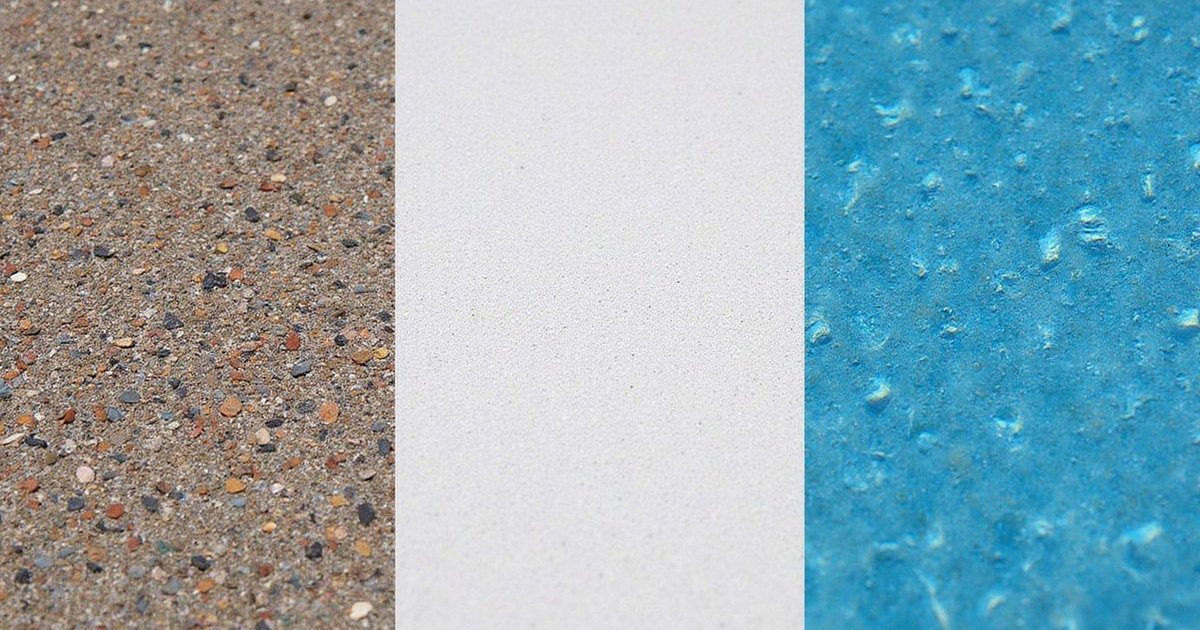
Quartz finishes, like NPT QuartzScapes or the classic Diamond Brite, add crushed quartz stone to the plaster mix. This modifies the surface to be harder and more non-porous than standard plaster.
Why it lasts longer:
- Hardness: Quartz scores a 7 on the Mohs Hardness Scale (plaster is around 3-4).
- Stain Resistance: The dense surface makes it harder for minerals and metals to penetrate.
Many of our customers find this to be the “sweet spot” for value, balancing cost with a decade-plus lifespan.
Pebble Finishes
Lifespan: 15-20+ Years
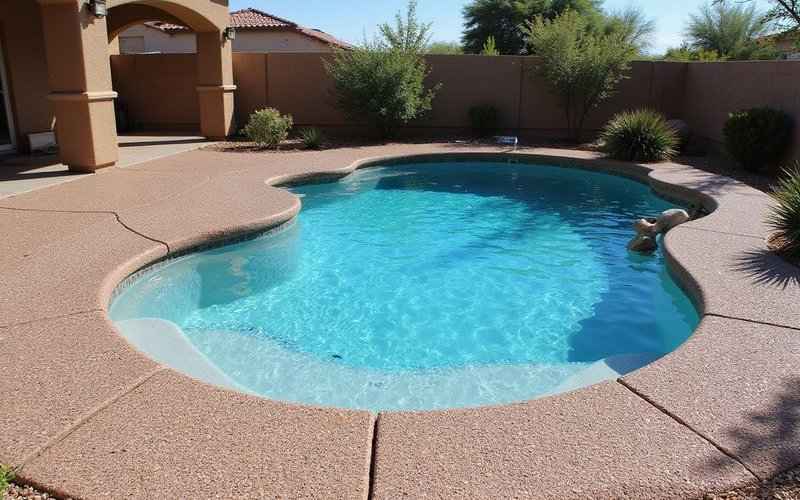
Pebble surfaces are the gold standard for durability in the desert southwest. It is common for us to see pebble pools installed in the early 2000s that still look structurally sound today.
Top brands we encounter in Phoenix include PebbleTec, Wet Edge, and NPT StoneScapes. These finishes use small river pebbles embedded in cement, which creates a surface that is mostly stone.
Insider Tip: If you want the durability of pebble but hate the rough texture on your feet, look into “mini-pebble” or polished aggregate lines like Wet Edge Primera Stone or PebbleSheen. These are sanded or polished flat, giving you the smooth feel of plaster with the 20-year lifespan of stone.
Quick Comparison: Cost vs. Longevity
| Finish Type | Est. AZ Lifespan | Relative Cost | Best For… |
|---|---|---|---|
| Standard Plaster | 5-10 Years | $ | Tight budgets or selling the home soon. |
| Quartz Aggregate | 10-15 Years | $$ | Homeowners wanting good value and smoother texture. |
| Pebble/Stone | 15-20+ Years | $$$ | Long-term owners who want the lowest maintenance. |
| Polished Aggregate | 15-20+ Years | $$$$ | Luxury look with maximum smoothness and durability. |
What Affects Lifespan Most
The LSI Factor (Water Chemistry)
Most pool owners focus on Chlorine and pH, but the Langelier Saturation Index (LSI) is what actually protects your surface.
The LSI is a calculation that determines if your water is corrosive (eats plaster) or scale-forming (deposits calcium). In Phoenix, our water comes out of the tap scale-forming.
We strongly advise maintaining your LSI between -0.3 and +0.3. If your LSI drops too low (aggressive water), it will leech calcium directly out of your new finish, causing permanent pitting in a matter of months.
The “Hot Start” Risk
The first 28 days after resurfacing are when your finish cures and reaches its final hardness.
Improper startup procedures in Arizona heat can be disastrous:
- Premature Filling: Stopping the water flow can leave a permanent “ring” on the new finish.
- Dehydration: If the plaster dries out before the pool fills (common in 110°F heat), it creates weak spots known as “check cracks.”
We handle the startup process for our clients because a mistake here voids warranties and ruins the aesthetic immediately.
When to Plan Your Resurface
Don’t wait until you see gunite (the concrete shell) showing through.
Warning signs to watch for:
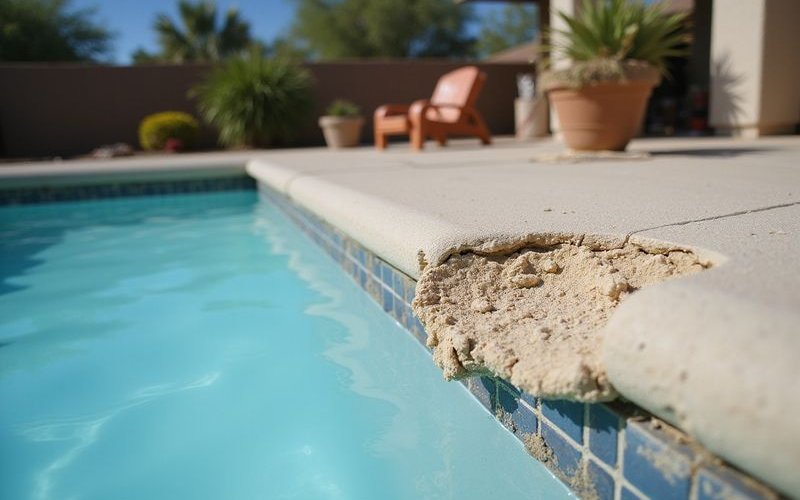
- Delamination: Hollow spots where the plaster has separated from the shell. You can often hear these “pop-offs” if you tap the surface with a coin.
- Roughness: When the smooth cement cream wears away, exposing sharp sand (often called “shark skin”).
- Embedded Algae: Black algae that roots into pits and cracks is nearly impossible to remove without resurfacing.
Recommended Evaluation Timeline:
- Plaster: Start checking year 7.
- Quartz: Start checking year 10.
- Pebble: Start checking year 15.
Maximizing Your Finish’s Life
You can add years to your pool finish by following a few specific protocols.
- Manage Calcium Hardness: Since Phoenix water adds calcium constantly, you must drain and refill your pool every 2-5 years. Once calcium hits 800-1000 ppm, it becomes nearly impossible to stop scale from ruining your finish.
- Brush Weekly: Even pebble pools need brushing. This removes the biofilm that protects algae and keeps the surface smooth.
- Check Your CYA: Cyanuric Acid (stabilizer) levels climb as you add tabs. In our intense sun, high CYA can lock up your chlorine, forcing you to shock the pool more often, which bleaches and weakens the surface.
Questions about your pool’s condition? Call (602) 619-1234 for a free assessment. We will give you an honest evaluation of how much life is left in your current finish.
Tags
David Resurface
Pool resurfacing expert with over 15 years of experience in the Phoenix market. Passionate about helping homeowners transform their backyards into personal oases.